Getúlio Elias
Original concept and modelling leadGetúlio conceived the initial idea and prototype. Even after completing his own placement, he taught me the foundations of Blender and continued to guide the project.
LinkedIn · Getúlio EliasCollaborative VR environment
CASE 02A published VRChat world for learning and social connection, rebuilt in Unity through UdonSharp systems, performance-focused 3D work and close collaboration.
Published VRChat world · IPSantarém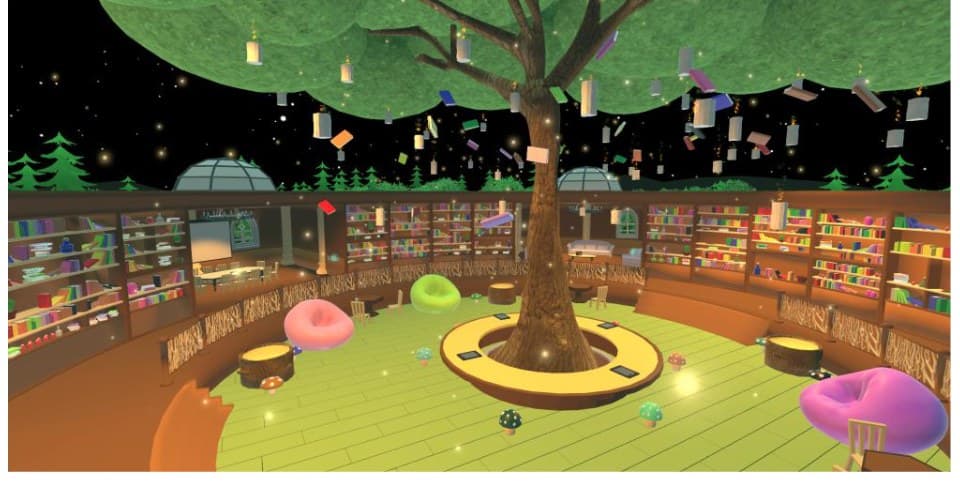
Project overview
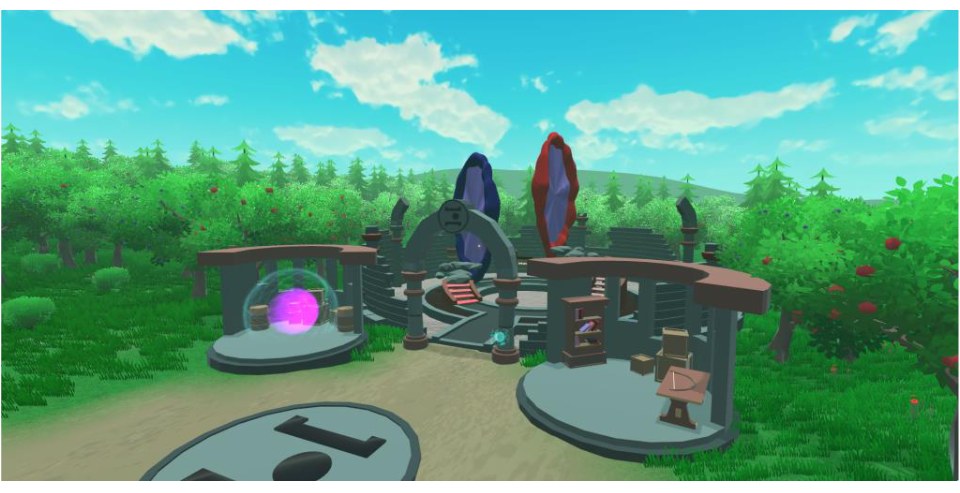
E-Lounge is a social and educational VRChat world created for the IPSantarém academic community. It brings together a dynamic library, social spaces, multimedia tools, playful interactions and areas for shared events inside an environment designed to work on both PC and Meta Quest.
The project began with Getúlio Elias's idea and early prototype. I joined as the initial programmer and spent the following months helping to reshape the Unity world, build its interactive systems, solve performance problems and learn the foundations of Blender under Getúlio's guidance. Diana Santos and the UEDIPP team were also central to turning that starting point into a published collaborative environment.
Project trailer
An archival presentation of the original world, its spaces and the experience created for the IPSantarém community.
This video was not created by João Andrade. It was produced at the time by a colleague from the unit and is presented here from the original E-Campus IPSantarém E-Lounge source.
Original E-Campus sourceOriginal 3D work
For roughly two months, programming and world design happened alongside my first serious steps in Blender. Getúlio gave me the foundation, then I applied it directly to objects the world could use.
The fishing rod was modelled and programmed from a single reference image. The pickaxe studies were created to understand modelling tools and speed up my workflow. These are the original project files converted for this interactive portfolio viewer.
Building the living world
The work was not a list of isolated features. It was the effort of making books, media, music, water and multiplayer feel like the same place, then refining that place until VRChat could run it reliably.
Floating books, interactive seating, video, livestreams, music, lighting and teleportation made each room useful instead of merely decorative.
UdonSharp events, ownership checks and synchronized state kept the same interactions dependable for several visitors at once.
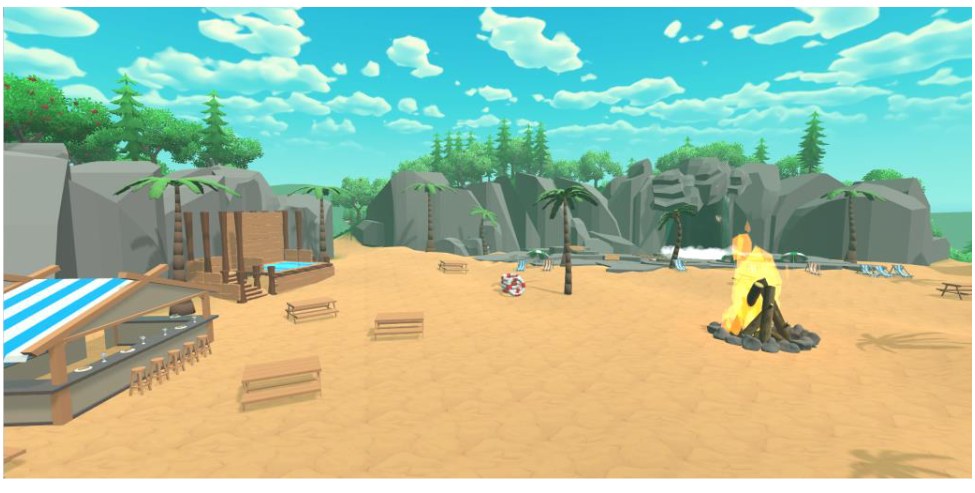
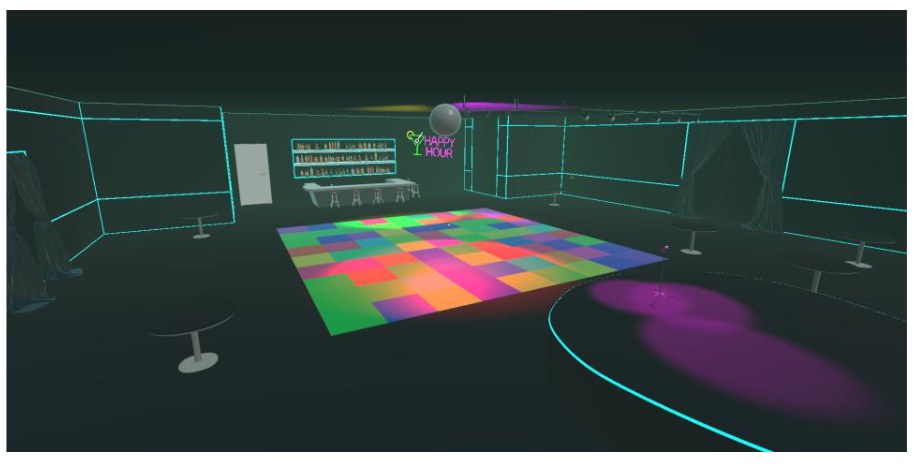
The fishing rod, water behaviours, reactive dance floor and playful objects were built as small experiments that made the environment feel inhabited.
Built-in rendering, baked lighting, probes, LODs and event-driven managers replaced heavier ideas so the world remained practical on PC and Meta Quest.
Published environment
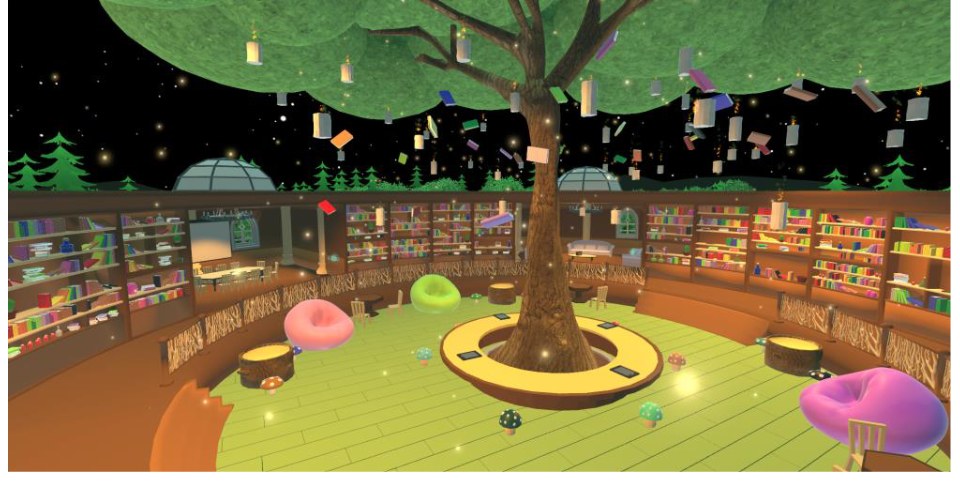
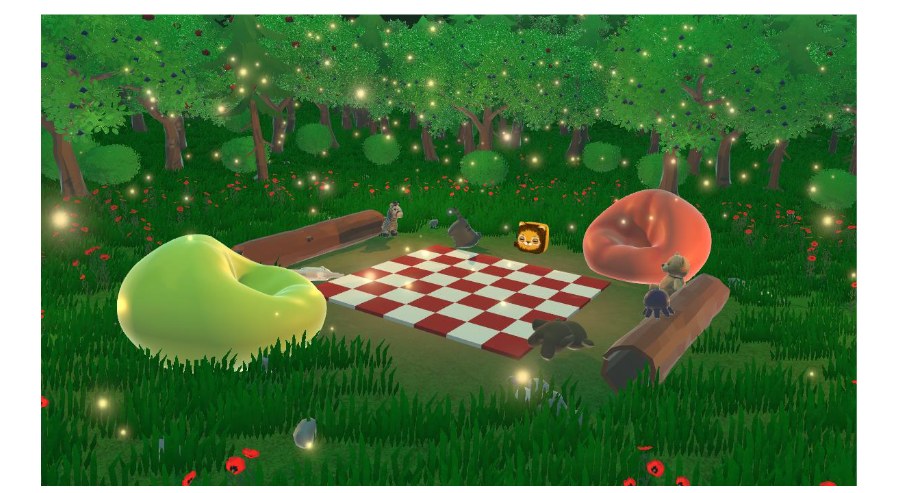
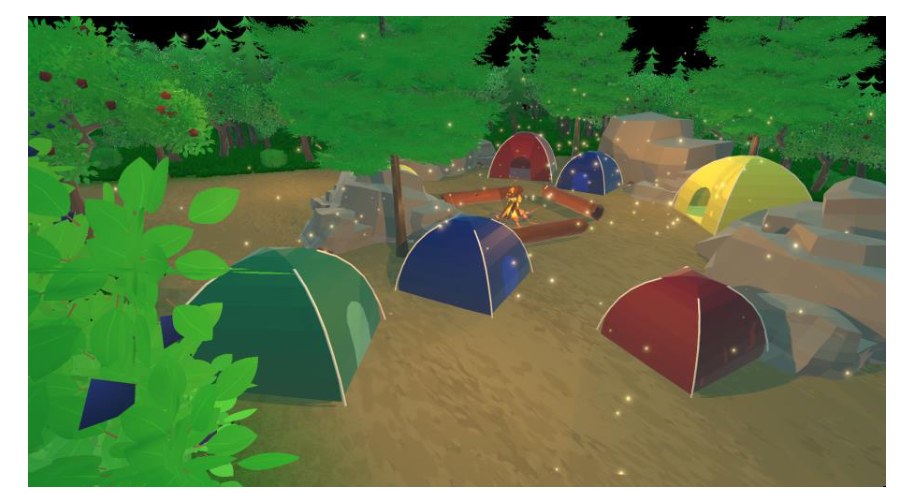
The final spaces move between study, play and informal connection. These images were extracted directly from pages 30 and 31 of the internship report.
The world is published
Two direct paths to the project: visit the published VRChat world or open the complete record of its design, development and results.
Launch the published environment, then visit its official IPSantarém page for the original institutional context.
The complete internship report covering responsibilities, technical decisions, development challenges and the final published result.
Continue exploring
See all projects